
Get Started
Help & Accessibility
NAVIGATION
Map
List of Questions
CONTENT
House & Living
Leisure & Mobility
Participation & Employment
Care & Support
Legal Framework
Forum/ Reflexion Tool
Topics related to Participation and employment
Communication
Why is communication between people with care needs and disabilities and you important?
This section will address communication between you, as an informal caregiver, and the person you care for. This topic strongly depends on the type of impairment or condition that the care receiver possesses. Considering how cognitive abilities and communicative skills can vary, the YoungCare project works towards providing information on how informal caregivers can communicate effectively while considering different disabilities, physical and mental impairments, and chronic illnesses.
Establishing good communication between people with care needs and disabilities and you is essential to better understand the needs of both parties.
Some personalities and conditions or impairments may be more challenging than others for some. While attending to these specific aspects that can influence your communication and relationship, some aspects should be considered. To do so, this section outlines good communication tips, from the perspectives of both the caregiver and the care recipient, good practices, and materials.
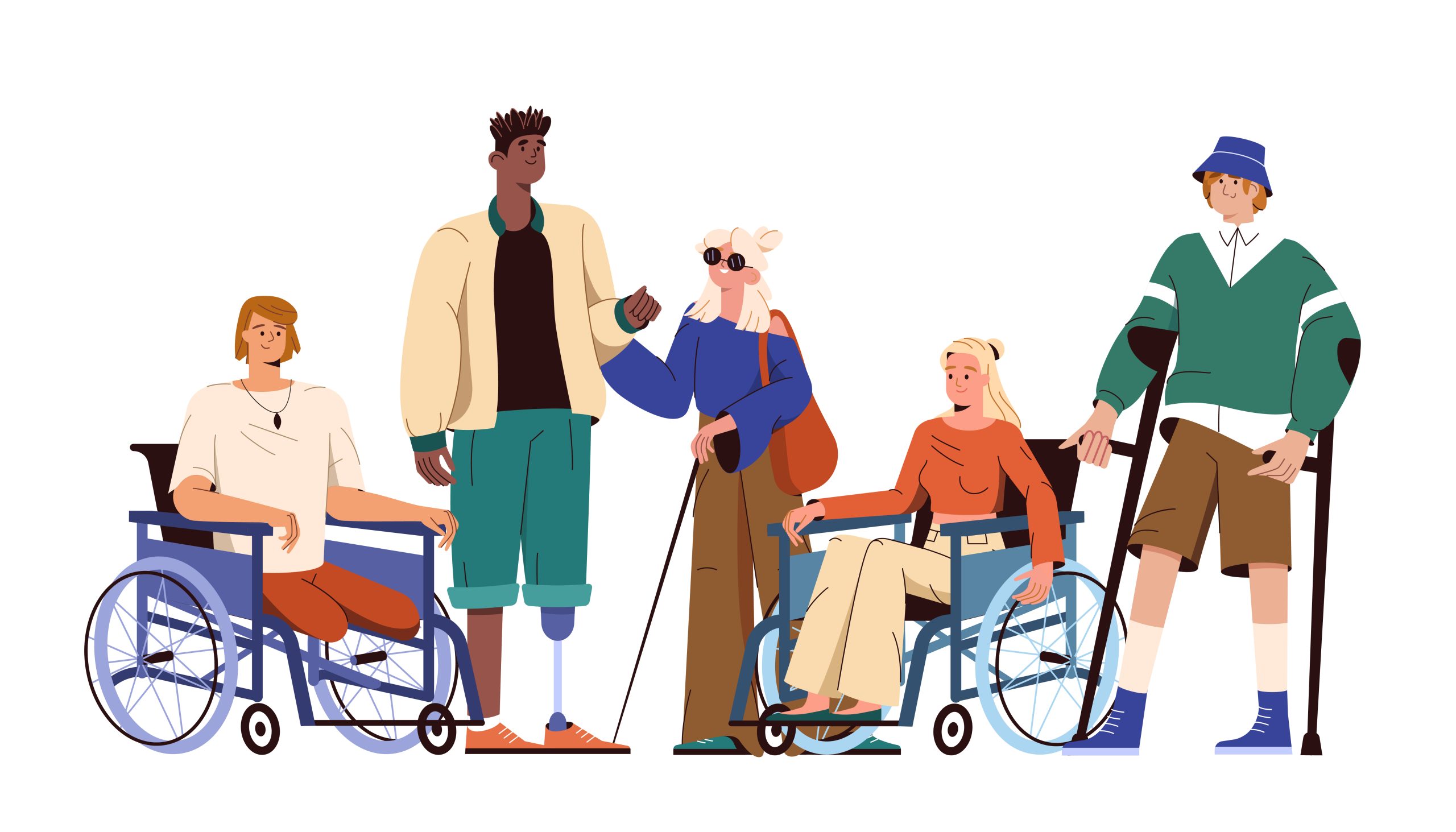
What are the benefits of good communication for adults with care needs and disabilities?
Even if some people might be more demanding than others, an effective way of communicating can always bring benefits for both adults involved. From the perspective of care receivers, benefits can include:
- Being able to better express what they wish and need from you, by establishing an atmosphere where the person with care needs may freely express their preferences, feelings, and views without worrying about being rejected or judged.
- Being able to properly communicate the tasks they would like to perform independently or, when necessary, when their boundaries are being crossed, or simply when something isn’t right. In cases where this can’t be achieved verbally, some materials, apps, or digital software may be helpful. Some of these are designed to assist in specific conditions or can be simply used more generally, to enhance communication.
Just like adults with care needs should be able to express their needs and boundaries, so should you. This is why it is important to establish healthy communication methods, so that both parties may benefit from openness and transparency.
How to sensitively communicate with different groups of people with care needs and disabilities?
To relieve you of some of the effort required for their daily tasks, effective communication can be key. To do so, there are some tips and resources that can be considered and adjusted according to the specificities of each case.
Asking a care recipient what communication method they prefer, or what is easier for them to use and understand is crucial. This way, their requirements can be met along with the accessibility needs related to their health condition. For adults whose verbal communication is impaired this may be challenging. Therefore, paying attention to non-verbal cues is also critical. Additional techniques are suggested below or on the video:
- For cognitive impairments: Use simple, concrete language. Break down tasks into small, manageable steps, and offer instructions one step at a time. Visual aids like pictures, symbols, or colour coding can make instructions easier to follow. Repetition and patience are key, as some individuals may need extra time to process information.
- For visual impairments: Clear verbal descriptions are essential. Narrate actions and surroundings, and use tactile tools, like Braille or raised markers, to support understanding. Audio-based tools, such as screen readers or voice assistants, can also help facilitate communication and access to information.
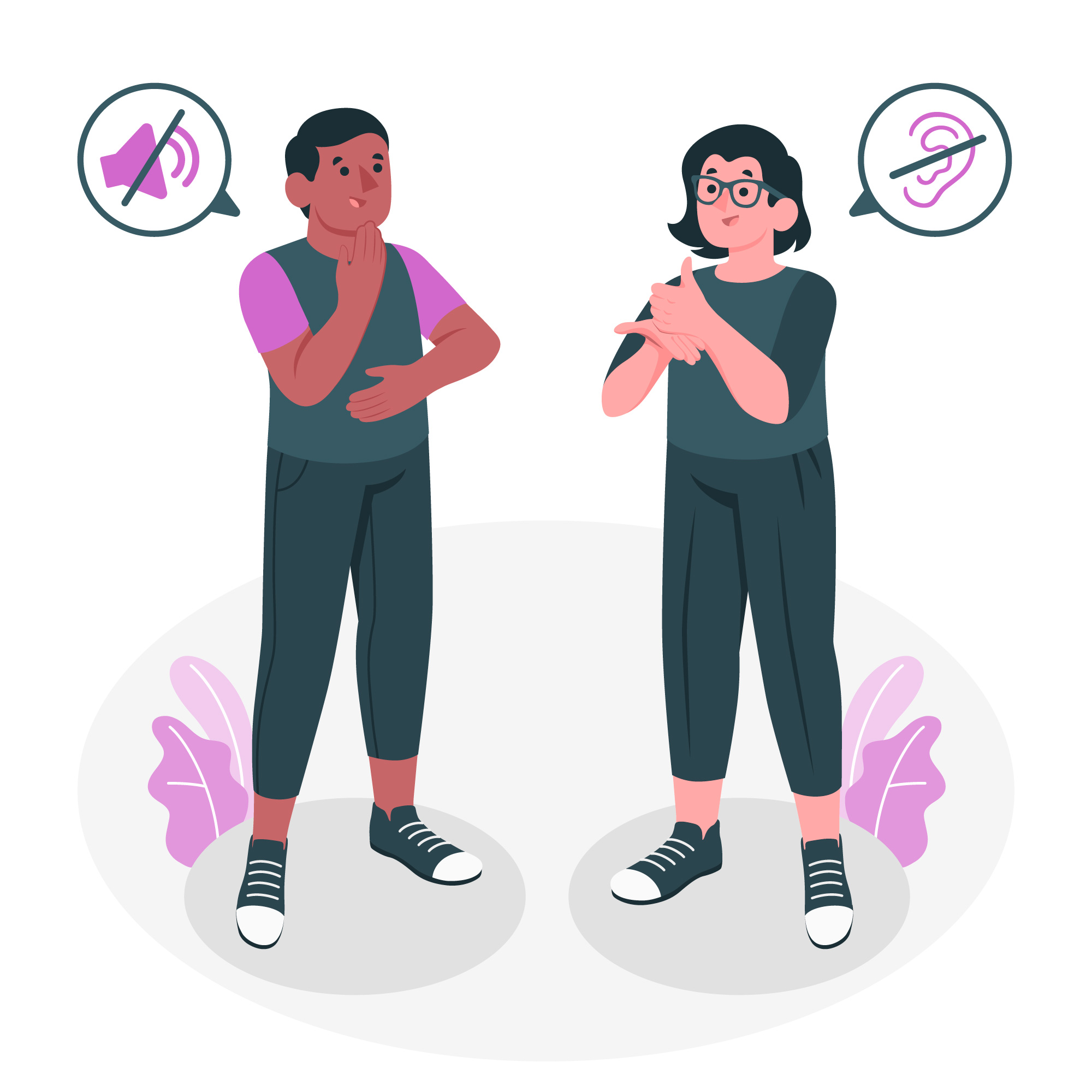
- For hearing impairments: Communication can be enhanced through a variety of methods, including sign language, written notes, or apps that convert speech to text. Visual cues, like gestures or symbols, can also be helpful. When speaking, make sure to face the person directly and speak clearly, so they can lip-read if that helps.
- For mobility impairments: Ensure access to communication devices that are easy to use, such as adapted keyboards, touchscreens, or voice-activated devices. Position yourself at their level during conversations, whether by sitting down or adjusting the height of chairs, so eye contact is maintained, fostering a deeper sense of connection and respect.
- For speech impairments: Support individuals with speech difficulties through alternative communication tools, like communication boards, picture-based systems, or voice-output apps that can verbalise their thoughts. Encourage the use of these tools by giving them time and space to express themselves without rushing or interrupting.
What can you do to improve their communication with people with care needs and disabilities?
One of the main highlights should be that each case has its characteristics and needs. Firstly, the healthcare assistant should inform you about the adult’s condition and what that entails in terms of limitations, among other aspects. Some research can also be conducted on the topic to add to the available information. After assessing what can and can’t be done, and what resources are available, it’s important to try and understand the care recipient’s needs. If possible, try to ask them about their wishes and boundaries.
Some conditions may have a very different course and specific characteristics over time; this may influence communication in the long run. Some adjustments may have to be made to guarantee as much comfort as possible for both parties. You can also seek assistance from your general practitioner, for instance, who can guide you on this path and help you understand how to improve communication with the young adult you care for.
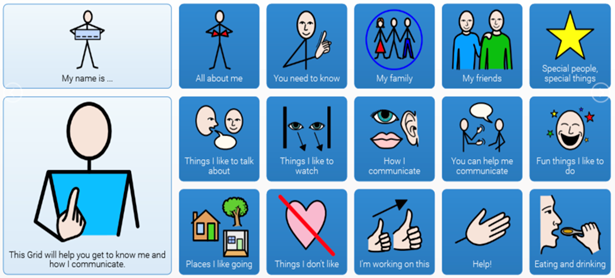
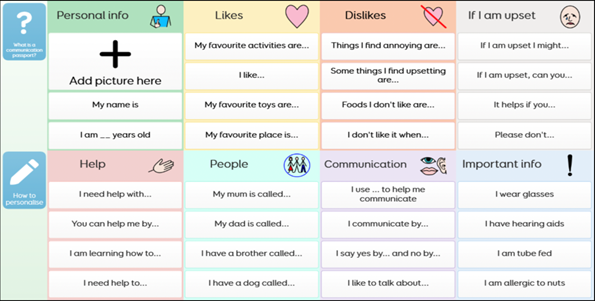
In some cases, a communication passport can also be a valuable tool to support communication. This is a personalised document that brings together essential information about a person who requires some type of care. The main objective is to facilitate interaction between this person and their caregivers, family members, health professionals, or educators, ensuring that care and communication are tailored to their individual needs.
This type of passport is particularly useful in contexts where the person being cared for interacts with different professionals or environments including hospitals and healthcare units, schools and educational institutions, care homes and residential centres, home care services, community or recreational settings.
By providing a clear overview of the person’s preferences, needs, and ways of communicating, the passport promotes a person-centred approach, thus respecting their autonomy and dignity.
The passport should be highly personal and tailored to each person’s circumstances and needs, with no single standard model. Nevertheless, there is some basic information that can be included in the communication passport:
- Personal information: name, age, photograph (optional, depending on relevance), and contact details of the person being cared for;
- Communication methods: description of preferred methods of communication (verbal, gestural, or other), and any assistive devices used, if applicable;
- Personal preferences: likes, dislikes, daily routines, and favourite activities;
- Medical history: relevant health conditions, current medication, possible allergies;
- Support network: list of contacts including family members, friends, and health professionals directly involved in the person’s care. Where possible, clearly identify each person’s role (e.g., main caregiver, lead doctor, trusted friend, etc.) and organise the contacts in order of priority. Also indicate whether these people should be regularly updated about the person’s condition and needs;
- Development goals: specific objectives related to the well-being and autonomy of the person being cared for.
Examples of communication passaports:
Good Practices
Inclusive communication in public transportation
Accessible announcements: Trenitalia and many local public transport companies are implementing visual (monitor) and audible announcements to ensure accessibility for people who are deaf or blind.
Inclusive mobility apps: Apps such as Moovit or local projects (e.g., MoveForAll in Rome) provide directions in adapted formats, such as tactile maps or spoken descriptions.
Augmentative alternative communication (AAC) in educational and health services
Hospitals and outpatient clinics are adopting AAC to facilitate communication with nonverbal patients, as in the Turin ASL project.
In Italian schools, software such as Boardmaker and symbolic tools are used to support students with cognitive or verbal disabilities.
MEE NL is a cooperative with 20 MEE-organisations spread across the Netherlands. MEE NL provides information and advice to municipalities and healthcare offices, and offers training to professionals and organisations on treating and communicating with disabled individuals. Their vision is to create an inclusive society, where participation and quality of life are central.
Uitkomstgerichte zorg (outcome-oriented care)
This is a partnership between the government and various organisations whose aim is to improve the situation for patients and healthcare workers by not only looking at medical aspects, but also at the quality of life during and after treatment. By mapping out the outcomes of treatments and properly discussing all decisions with the patient, care and support can be made more fitting and appropriate.
Ieder(in) toolkit for municipalities
A toolkit to help municipalities make their website inclusive for all. It contains a step-by-step guide to convince municipalities of the need, an accessibility test, tips on how to organise a demonstration, and advice on how to contact target group experts.
The Ava app creates subtitles during a conversation so that deaf people can read what is being said. It can also convert text to speech. Deaf and hard of hearing people who do not speak can actively participate in conversations with a natural sounding voice. You can use it on your desktop or as an app. It is available for iOS and Android and has a free test version. App name: Ava.
An app designed to aid the communication of literate people who have speech impairments (such as motor neurone disease, amyotrophic lateral sclerosis, cerebral palsy, autism, or people with head and neck cancer, to name a few). Link 2.
Aplicação Afasia Instituto Português da Afasia [Portuguese Aphasia Institute App]
This is an app designed in Portugal to enhance communication in people with aphasia. It is completely free to use, with a simple and intuitive design to facilitate its use. To know more about it, visit the relevant website and consult the user’s guide. Link 2.
The purpose of this app os to facilitate communication for users with limited or without motor skills, or for those who need alternative means of communication. It can help users with cerebral palsy or aphasia, for example. Smartphone functions are easier to access, and “text to speech” features have also been included, with users able to write down what they want to communicate, and the app “reading” it out. Android | App store.
This software is a free screen reader option that can help people who have either vision impairments or are blind. It is available for Windows users in multiple languages, including Portuguese.
Resources
Telecare in LIS: Platforms such as VEASYT Live! or SignLive enable deaf people to communicate remotely with institutions and businesses through real-time LIS interpreters. Link 2.
Easy-to-understand patient information
This website offers a wide range of health information on various diseases and health topics that is easy-to-understand thanks to the plain language being used.
Hurraki_dictionay in easy language
Hurraki is a free online dictionary written in easy-to-understand language. Users can contribute content.
Aktion Mensch offers an overview of some useful barrier-free apps that help with communication as well.
Instituto Português da Afasia [Portuguese Aphasia Institute]
Communication tips compiled by the Portuguese Aphasia Institute to strengthen relationships between adults with aphasia and their caregivers.
Manual do Cuidador [Caregiver’s Manual]
Manual created by the Portuguese government highlighting the importance of effective communication between caregivers and individuals in need of care, along with practical tips (see page 11).
SOPA is a social employment agency whose mission is to provide supported employment services to people in need of care.